The old city of Brest, including its ancient Great Synagogue, were demolished to make way for the Brest Fortress:
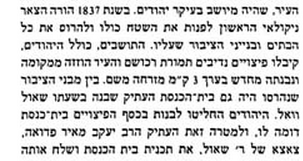
The English translation:
In 1837 Tsar Nicholas I ordered a total evacuation of the area, and the
demolition of all the existing houses and public buildings. The
inhabitants, including the Jews, received generous compensation for
their property and the city was relocated and rebuilt
approximately three kilometers to the east. Among the public
buildings to be demolished was the ancient
synagogue that
Saul Wahl had built.
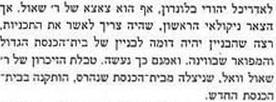
Chronologically, it is impossible that Saul Wahl was responsible for building the entire ancient synagogue. That only the women’s section was built by Saul Wahl is stated in Gdulat Shaul, and Rabbi Feinstein, in Ir Tehila and in this contemporary newspaper article, agrees.
The Jewish community decided to rebuild the
synagogue with the compensation money, and that the new one should
resemble the old synagogue.
For
this purpose, a descendent of Saul Wahl, Rabbi
Yakov Meir Padua, sent
copies of the original drawings to a Jewish architect in London,
who was also a descendent of Saul Wahl. However, Tsar
Nicholas I,
who had to approve the plans, wanted
the synagogue building to resemble the splendid Great Synagogue of
Vienna.
And thus it was done. Saul Wahl's memorial stone tablet was
rescued from the old synagogue and installed in the new synagogue.
Translation:
Saul Wahl built a women’s section onto the great synagogue in memory of his righteous wife, Dvorah. The stone [tablet] found in the synagogue when it was demolished testifies to this.
Unfortunately, neither the plans nor the tablet survived for our examination today.
| Notes: Shaul Wahl was a historical figure about whom a vast and sometimes imaginative mythology accumulated. It is not surprising that his contribution to the ancient synagogue was exaggerated. |